
The Burning of Washington

205 years ago today, James and Dolley Madison reunited here at Dumbarton House in Georgetown. It had been a horrendous few days for them. The war against the British, which some were calling a second war for independence, had gone terribly wrong. Just the day before, August 24, 1814, James had been leading American troops in battle in Maryland while Dolley prepared for his return home that evening.

Throughout the day, James sent messages to Dolley to update her on the fighting. As she went about doing the normal daily work at the President’s Mansion, she made occasional trips to the roof to use her spyglass to see what she could of the battle on the outskirts of the city. As the day grew late and dinner time neared, the messages grew more dire. The outcome of the battle did not look good for the Americans. James advised Dolley to begin packing.

While checking on both dinner and the battle, Dolley oversaw some packing and did some of her own. Important government papers were loaded onto wagons and sent to safety on a Virginia farm. Dolley began to pack personal items belonging to her and James but knew that anything related to the running of the country must take priority. She did, however, make sure her pet parrot made it to safety.

As wagons were being loaded, more urgent messages began to arrive. The American troops had lost the battle. The British would soon be marching into the city. Dolley must leave or risk being captured.

Realizing that she had no choice but to flee, Dolley paused for a moment in the Presidential Mansion. She had spent so many hours here, first as guest and hostess to her friend Thomas Jefferson and now as hostess in her own right. As the first Presidential wife to truly live in the mansion, she had been given the honor of decorating the rooms to her liking. She had managed to save the red velvet curtains from the oval room, but there was not enough time to save it all. The table had been set in anticipation of James and his men returning triumphant and hungry from a long day of fighting. The plates, the utensils, the food…it all must be left.

Those who were to accompany her to safety urged Dolley to climb into the wagon before it was too late. She took one last look around. Her gaze landed on a large full-length portrait of General George Washington. She could not leave this portrait of The National Hero to be desecrated by the approaching British army. She ordered that the portrait be taken down and sent off to safety. The picture would not come down from the wall. It could not be easily removed from its frame. Finally, as the British drew closer, the portrait was cut from its frame, rolled up, and placed into one of the wagons headed to Virginia and safety.

Dolley finally consented to climbing into her wagon. Disguised as a farm wife, she escaped into the night.

At the same time, the British troops marched into the city from the east. When they reached the yet unfinished Capitol Building, they set it ablaze. Sparks from that fire blew onto nearby buildings, burning them as well. Townhouses that George Washington had built on Capitol Hill were destroyed.

The British marched down Pennsylvania Avenue virtually unopposed. They planned to burn every public building along the way. However, they spared the Patents Office at the request of its director. Too many things of use to people around the world would have been lost. At one point, a local doctor tried to fight the British but was quickly taken prisoner.

When the British arrived at the President’s Mansion, they decided not to let Dolley’s dinner go to waste. After eating well, the soldiers were allowed to take whatever they wanted from the house. Finally, soldiers stationed themselves around the perimeter of the house. At the signal, each threw a flaming torch through one of the windows. The fire quickly took hold and lit up the night. It could be seen from miles away.

As the British troops began their march out of the city, a storm the likes of which had not been seen before in the Federal City blew in. Hail, driving rain, disastrous winds, even a reported tornado forced the British out of town faster than they had anticipated. The storm also managed to put out the flames of the buildings on either end of Pennsylvania Avenue and keep them from spreading farther.

As the sun rose on August 25, citizens of the Federal City surveyed the smoldering ruins. It was bad, but it could have been much worse. The Capitol Building with many important papers and the entire collection of the Library of Congress had been lost. Three full walls and one partial wall still stood at the President’s Mansion. In the coming days, a few usable items would be retrieved from the wreckage, but the mansion and its contents were mostly gone.

James and Dolley finally reunited at the Dumbarton House in Georgetown. From that vantage point, they could see the smoldering ruins of the city. They mourned their losses, gave thanks for what remained, and began to plan for rebuilding.
154 years

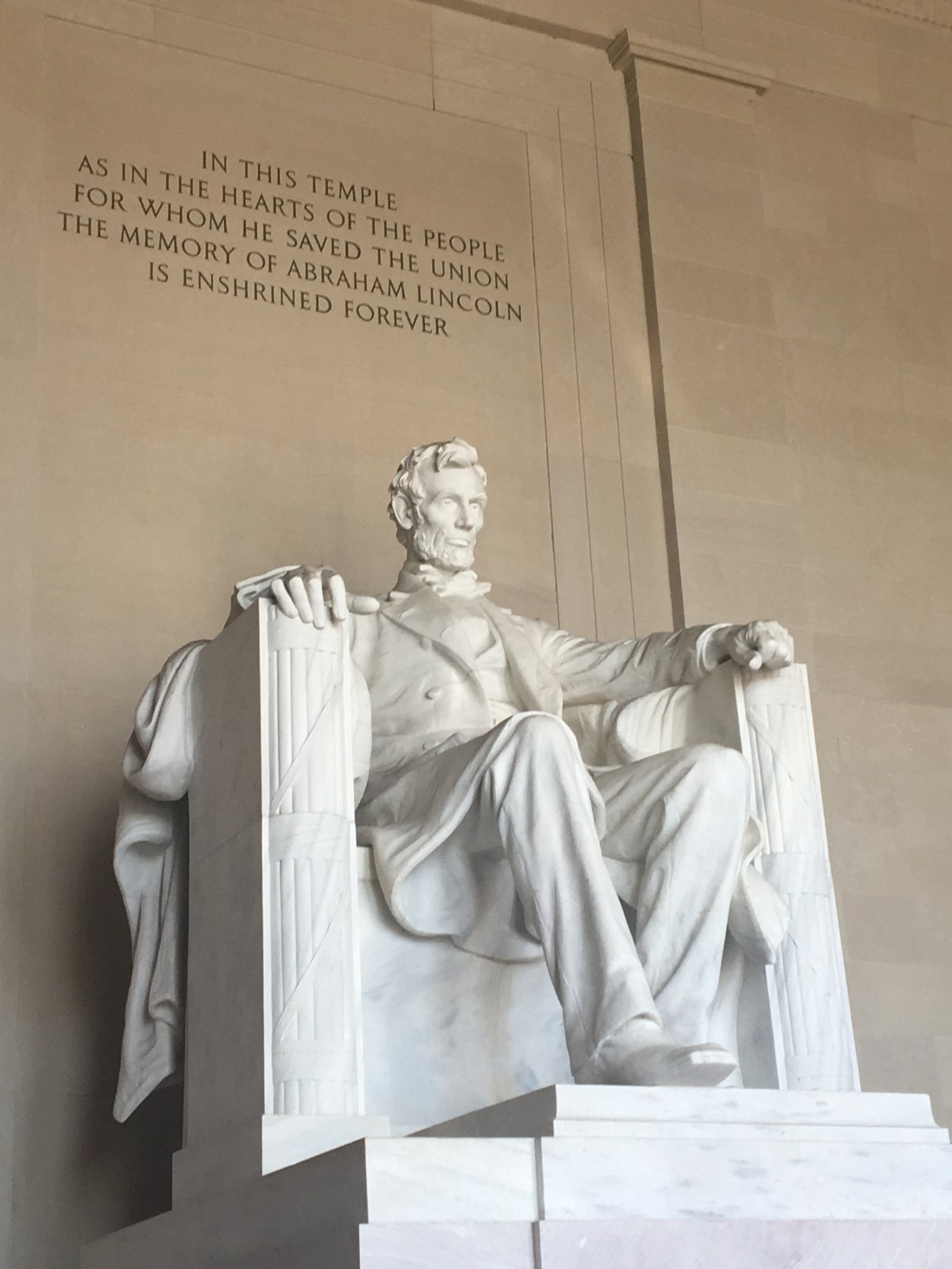
154 years ago, as Good Friday turned into Holy Saturday, the entire city of Washington stood vigil as Abraham Lincoln lay dying in a bed too small for his body. He lay diagonally on the bed. Even then his feet hung over the edge. Those attending him changed out the pillow beneath his head as each became soaked with his blood. Edwin Stanton sat in the back parlor conducting interviews of eyewitnesses. At one point, he banished “that woman” to the front parlor, and Mary was barred from her husband’s bedside as he died. It is said that her screams could be heard at least a block away. Robert split his time between his parents and was at his father’s side at 7:22am when Abraham released his final breath. Edwin Stanton solemnly declared, “Now he belongs to the ages.”

The Boss

When Harry Truman was 6, he walked into a Sunday School class in Independence, Missouri, and his entire life changed. Across the room, he saw a little girl with golden curls and the most beautiful blue eyes. From that moment, he knew she was the only one for him.

Elizabeth Virginia Wallace, born on this date in 1885, captured his heart that day. She and Harry grew up together as schoolmates. As a young woman, she was considered to be a tomboy, reputed to excel at whistling through her teeth and playing baseball. After her graduation from high school, her life changed dramatically with the death of her father. This traumatic event along with Harry’s desire to properly provide for her monetarily delayed the natural progression of their relationship.

She finally accepted his proposal in 1917. He delayed the wedding ceremony until his return from World War I. He did not want to leave her either a widow or a caretaker. They finally married on June 28, 1919. On February 17, 1924, their only child, Mary Margaret, was born.

For the entirety of their lives together, Bess was Harry’s partner in every sense of the word. She worked alongside him in both paid and unpaid positions as he rose through the political ranks. He turned to her for advice in virtually every major decision he made. He teasingly began to call her “The Boss” and Margaret “The Boss’s Boss”. As such a close family, the three of them were known by some as the “Three Musketeers”.

While Bess fully supported Harry in all that he did, she greatly disliked the spotlight it brought upon her. She believed in the old custom of a woman’s name appearing in public print only three times in her life: when she was born, when she married, and when she died. In spite of this, she admirably fulfilled her duties as First Lady while still maintaining a strong private life with her family and closest friends.

She gracefully dealt with criticism in her role as First Lady. Following Eleanor Roosevelt in the job led to numerous comparisons and expectations, but Bess quickly made the world realize that she would and could not be another Eleanor. As with too many other First Ladies, she dealt with criticism over a change in her hair style. Harry defended her by saying she looked exactly as she should look. She even received criticism related to Harry. According to the story, someone approached her to complain about Harry’s colorful use of language, specifically, the use of the word “manure”. Bess calmly replied, “Do you know how long it took me to get him to say ‘manure’?”

During her time in the White House, the House literally began falling down around her family. Harry, an avid reader and historian, insisted upon saving as much of the original House as possible. During the reconstruction period, the Trumans moved across Pennsylvania Avenue to a much smaller home, Blair House. Due to the lack of space in this temporary residence, Bess had an easier time maintaining her privacy while still fulfilling her duties in her public role.

After the Presidency, Bess and Harry returned to their home and private life in Independence, Missouri. Margaret married and started her own family. They traveled. They spent time with family and friends. They spent time together. They enjoyed life.

One day, Harry walked in on Bess burning all of the letters that they had sent to each other through the years. He tried to stop her by telling her to “think of history!” She replied, “I am.” Much as Martha Washington many years earlier, Bess felt that she had shared enough of her life with her husband with the public and did not need to share it all. (Some of the letters she missed were later published by her grandson, Clifton Truman Daniel.)

Bess lost Harry on December 26, 1972. In keeping with the simplicity of their lives, he did not have a State Funeral with ceremonies in DC. Instead, he had opted for a simpler ceremony in his hometown with burial on the grounds of his Library.

Bess spent the remainder of her life continuing to do what she enjoyed most: spending time with family and friends and voraciously reading.

She died in her home on October 18, 1982, at the age of 97. To date, she is the longest lived First Lady.

February 12…Happy Birthdays!

Today is a date for three Presidential-related birthdays: one First Lady, one President, and one First Daughter. Two are more well known than the third, but all three made their marks on our country and in our world.

1775–London, England–Louisa Catherine Johnson, born to American merchant Joshua Johnson and Englishwoman Catherine Newth. Louisa grew up with her seven siblings partly in and around London and partly in Nantes, France. In 1795, Louisa met an American diplomat, who came from a rather prestigious American family, named John Quincy Adams. At first it seemed as if John were more interested in Louisa’s older sister, but he married Louisa on July 26, 1797. Theirs was not the easiest of marriages. Due to his various governmental positions, they traveled and moved frequently. They managed to have four children: George Washington Adams, John Adams II, Charles Frances Adams, and Louisa Catherine Adams.

In 1809, Louisa left her two older sons with their Adams grandparents and traveled with her younger son and husband to St. Petersburg, Russia. It was here that baby Louisa was born, and a little over a year later, died. It broke her heart when she left St. Petersberg in 1814 to leave her only daughter behind as she and her son Charles traveled with minimal security and without John Quincy across a wintry and war-damaged Europe. They survived this treacherous 40 day trip in order to join John Quincy in Ghent where he was working on peace negotiations to end the War of 1812.

In 1825, Louisa became our country’s first foreign-born First Lady. She mostly disliked her time in the White House, living with depression during the time she was there. She even wrote an unpublished memoir titled, Autobiography of a Nobody. The main highlight of her time as First Lady was the wedding of her middle son John. To date, he is the only Presidential son to have been married in the White House.

Louisa lived four years after her husband’s death. She died on May 15, 1852. On the day of her funeral, both houses of Congress adjourned out of respect for her, the first time this had ever been done for a woman.

1809–Sinking Spring Farm, Kentucky–Abraham Lincoln. What more can be said about this great man? What stories can be told that have seldom been told before? What more can be written?

Abraham came from a quite humble background. he was born in a small cabin in Kentucky. His family moved to southern Indiana in 1816, shortly before Indiana became a state. His mother died when he was only nine. His father remarried the following year. He attended school for less than a year out of his life, but he managed to educate himself by observing, listening, asking the right questions, and, especially, by reading. In 1830, Abraham moved with his family to Illinois where he ultimately became a lawyer and later a politician. In 1840, he became engaged to a young woman by the name of Mary Todd from Lexington, Kentucky. For an unknown reason, he called off the wedding. After nearly a year apart, mutual friends brought them back together, and they married on November 4, 1842.

They had four sons: Robert, Eddie, Willie, and Tad. Eddie died at age 4. Willie died at age 12 in the White House. Tad outlived his father by just a few short years and died at the age of 18. Only Robert lived to grow up and grow old. While their relationship with Robert seemed to be somewhat strained, both parents doted on their two youngest. Willie and Tad had very few if any limits put on what they could do. Abraham spent as much time with them as possible in spite of his responsibilities to the country, even allowing them to interrupt important meetings for seemingly trivial reasons. He frequently walked to a toy store on New York Avenue in order to buy more toys for his youngest.

We will save the story of his death for another day. Let’s end here on a more positive note. Most historians rank Abraham as our country’s greatest President. He not only was a great President but also a great husband and father.

1884–New York City, New York–Alice Lee Roosevelt–One story that sums up Alice best is one told about her father. Supposedly, someone came to Theodore one day while he was President and told him that he needed to control that wild daughter of his. Theodore looked at the man for a moment and replied, “I can either run the country or I can control Alice. I cannot possibly do both”.

Alice’s life started off under the saddest of circumstances. Two days after her birth, her mother Alice died of kidney failure. A few hours before that, Alice’s Grandmother Roosevelt had died in the same house of typhoid fever. In order to deal with this horrendous loss, Theodore left baby Alice in the custody of his oldest sister and spent the better part of the next two years in the Dakotas helping to build his legend. Theodore returned to New York in 1886 and soon married his childhood sweetheart, Edith Carow.

Edith insisted that Alice come to live with them and be part of their growing family. Alice ended up with four brothers and one sister. As Alice grew, she gained a reputation for being independent, out-going, and self-confident. At one point, she made a deal with her father. If he did not force her to go to school, she would read her way through his library at home and educate herself. She probably gained a better education in that manner than she ever would have in a traditional school.

She was 17 when her family moved into the White House. She became an overnight celebrity. At her debut in 1902, her blue dress started a fashion craze of the color “Alice blue”. Alice had always been a bit of a wild child, but now she gained more notice for it. She rode in cars with men…and occasionally drove herself. She stayed out late at parties and was caught placing bets with a bookie. She had a pet snake, “Emily Spinach”, given that name for its color and for it being as thin as her Aunt Emily. Occasionally Emily Spinach “mysteriously” appeared at formal gatherings in the White House, causing a bit of a stir. She also smoked. (At one point her father told her that she was not allowed to smoke under the roof of the White House. Her solution: she smoked on top of the White House roof!)

In 1905, she met Congressman Nicholas Longworth. They married in the East Room of the White House in February 1906. Alice wore a blue gown, had no attendants, and cut her wedding cake with a sword rather than a knife.

After her father’s death in 1919, Alice’s marriage went through some difficult times. Because of this, Alice began spending a fair amount of time with Senator William Borah. In due time, Alice’s only child, daughter Paulina Longworth, was born. Alice was a rather distant mother while Nicholas doted on the child.

Alice lived the rest of her life in Washington, DC, in a house on Massachusetts Avenue. After the death of her daughter in 1956, Alice raised her granddaughter and was much closer to her than to her daughter.

Throughout her life, Alice maintained her reputation for being outspoken and noteworthy. She met with and advised Presidents and other leaders. As she grew older, she became much like Dolley Madison in that she was visited by dignitaries and invited to all major social events. She became known around town as “The Other Washington Monument”.

After dealing with several health issues, Alice died on February 20, 1980, at the age of 96. To date, she holds the record for longest lived Presidential child.

Angel Mother

On February 5, 1784, a baby girl named Nancy was born in what was then called Hampshire County, VA. Not a lot of information survives about Nancy’s childhood. There was some uncertainty about who her father was. Her mother could not properly care for her in her early years. Her maternal grandparents took over raising her until the age of 9. At some point, she moved with her grandparents and aunts and uncles to Kentucky. After the death of her grandfather, Nancy went to live with her mother, Lucy, who had recently been married and moved to Kentucky. However, after Lucy’s sister Elizabeth got married, Nancy went to live with her aunt and uncle.

In spite of her unusual childhood, Nancy managed to learn to read by using the Bible, and she developed a love for reading and education. She also learned all of the traditional skills expected of a young woman of her time and place. She became an excellent seamstress.

In due time, she met a young man by the name of Thomas. They married on June 12, 1806. Within the next six years, they had three children, a daughter and two sons; the youngest son died in infancy. Thomas did not much care for book-learning. He felt it was much more important to be able to make a living off of the land and with your hands. He worked hard at farming, cabinetmaking, and carpentry. He expected his son to work along with him and did not see much point in either of his children having a formal education.

Nancy, however, taught both of her children as much as she could. It is said that her son inherited much of his strong yet sweet and sympathetic personality from her. She also instilled within him a lifelong love of reading and learning everything that he could.

In 1816, the family moved to the southern area of what would soon become the state of Indiana. Two years later, on October 5, 1818, Nancy died of what is believed to be “milk sickness”. This illness was caused by drinking the milk of cows that had eaten a plant with a potent poison which passed through the milk. (There is some speculation that she may have died of consumption or cancer.) Her nine-year-old son helped his father make her coffin.

Many years later, her son, speaking of his “angel mother”, said, “God bless my mother; all that I am or ever hope to be I owe to her.”

Nancy Hanks Lincoln definitely gave the world a great man.

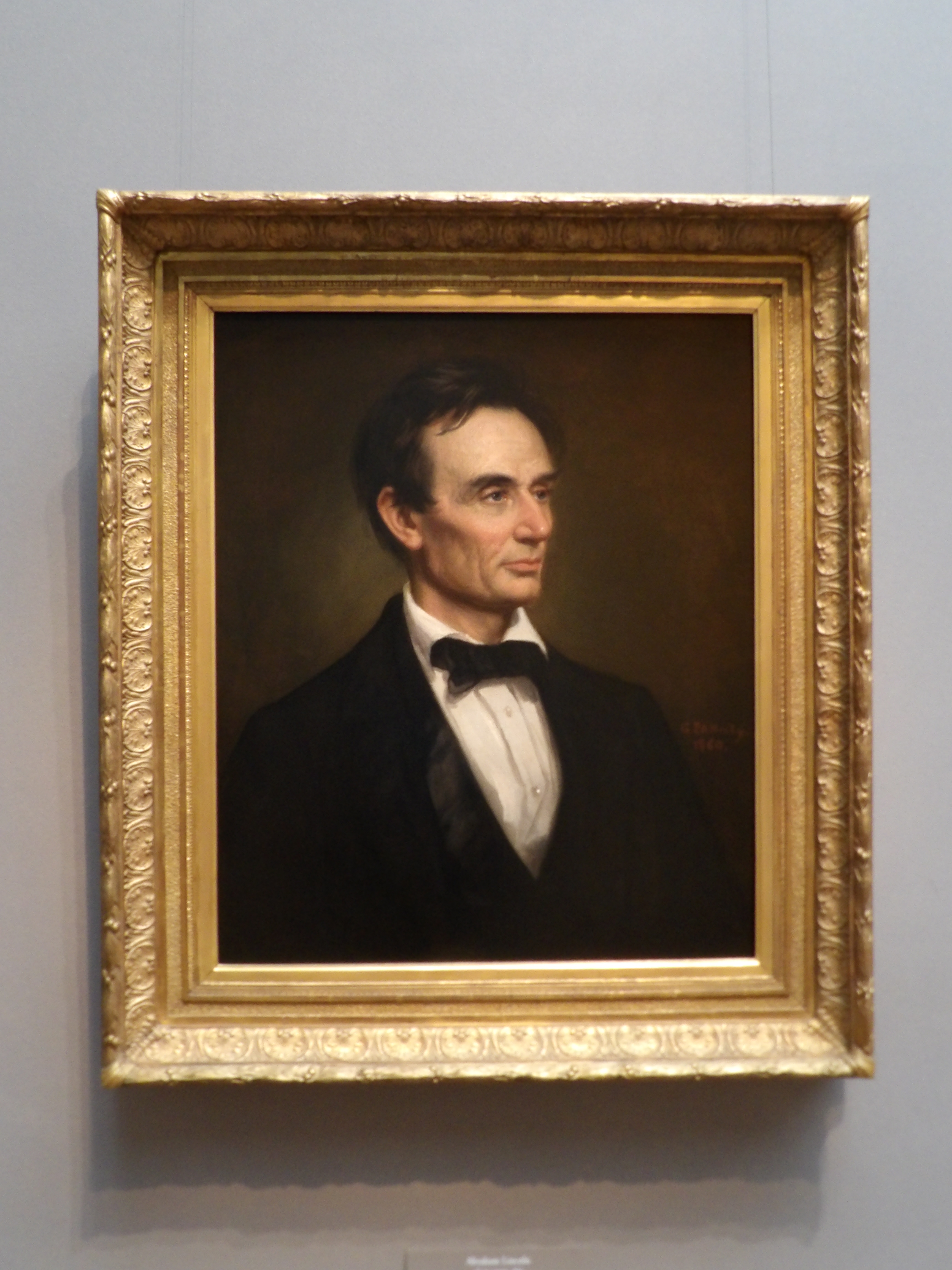
Portrait of Nancy Hanks Lincoln’s son, National Gallery of Art, Washington, DC.

February 4, 1789–Let’s Make It Unanimous!

After the Revolutionary War ended, George Washington felt that he had done all that he needed to do for our new nation. Because of this, on December 23, 1783, he resigned his commission as Commander-in-Chief of the Continental Army. At this point, he could have asked for any title or power in the new republic, and he probably would have received it. Instead, he gave it all up to return to the greatest loves of his life: Mount Vernon and his wife Martha.

While George enjoyed a relatively peaceful life, the new country hit a few bumps as it tried to establish itself. The first form of government under The Articles of Confederation, adopted in 1781, gave too much power to the state governments and too little power to the national government. This made life difficult for many in the new United States. By 1787, the Founding Fathers realized that they needed to make some changes. These changes resulted in the writing and adoption of the Constitution of the United States which is still in place today. One of the main provisions of this new government was that there would be one leader, a President, to oversee it all.

As the delegates cast their electoral votes for the first President from December 15, 1788 to January 10, 1789, it became clear that there was only one man capable of starting this country off right: George Washington. On February 4, 1789, the electors officially named him as the First President of the United States with a unanimous vote. Four years later, he again received a unanimous vote for a second term. To this day, George Washington is the only President to be elected unanimously, a record that will most likely never be broken.

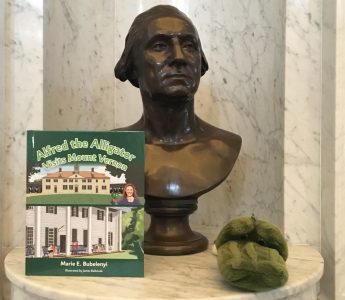
Statue of George Washington at the Mount Vernon Museum,
Alexandria, VA.

A Washington Family Wedding–February 3, 1774

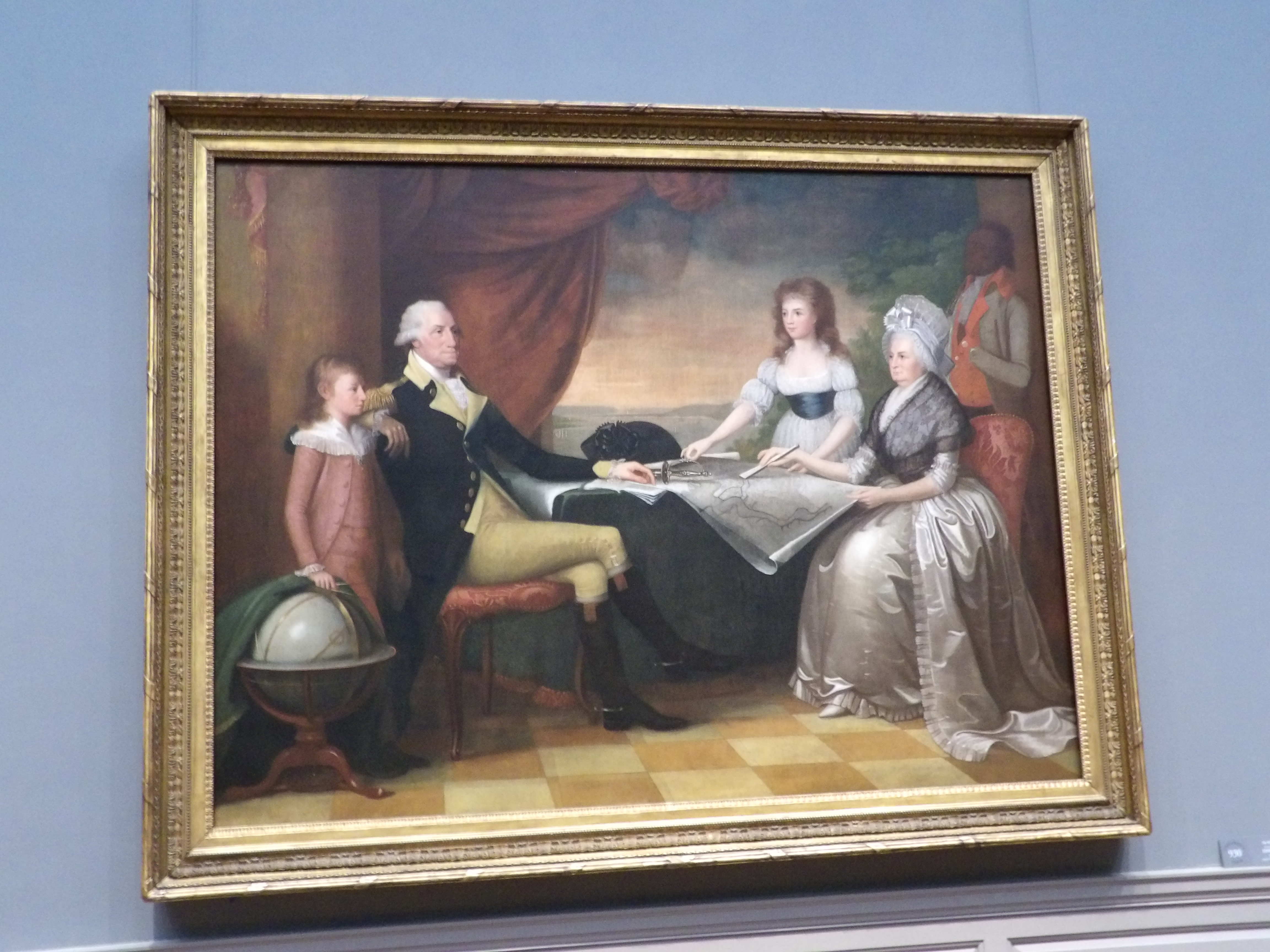
George and Martha Washington never had children of their own. Martha, however, had been married previously to Daniel Parke Custis and had four children with him. Two of those children, John “Jacky” Parke Custis and Martha “Patsy” Parke Custis, lived past childhood. Both were quite young when their widowed mother met the future General. By all accounts, George’s care and treatment of her children helped Martha to make the decision to marry the handsome young officer. Due to the terms of Custis family wills, George could not legally adopt the children; otherwise they would have lost their inheritance through their father. George loved the two and raised them as if they were his own. He had a slightly different view on disciplining the children than Martha did. After losing her first two children, Daniel and Frances, at such young ages, she did everything she could to keep her two surviving children healthy and happy, including spoiling them.

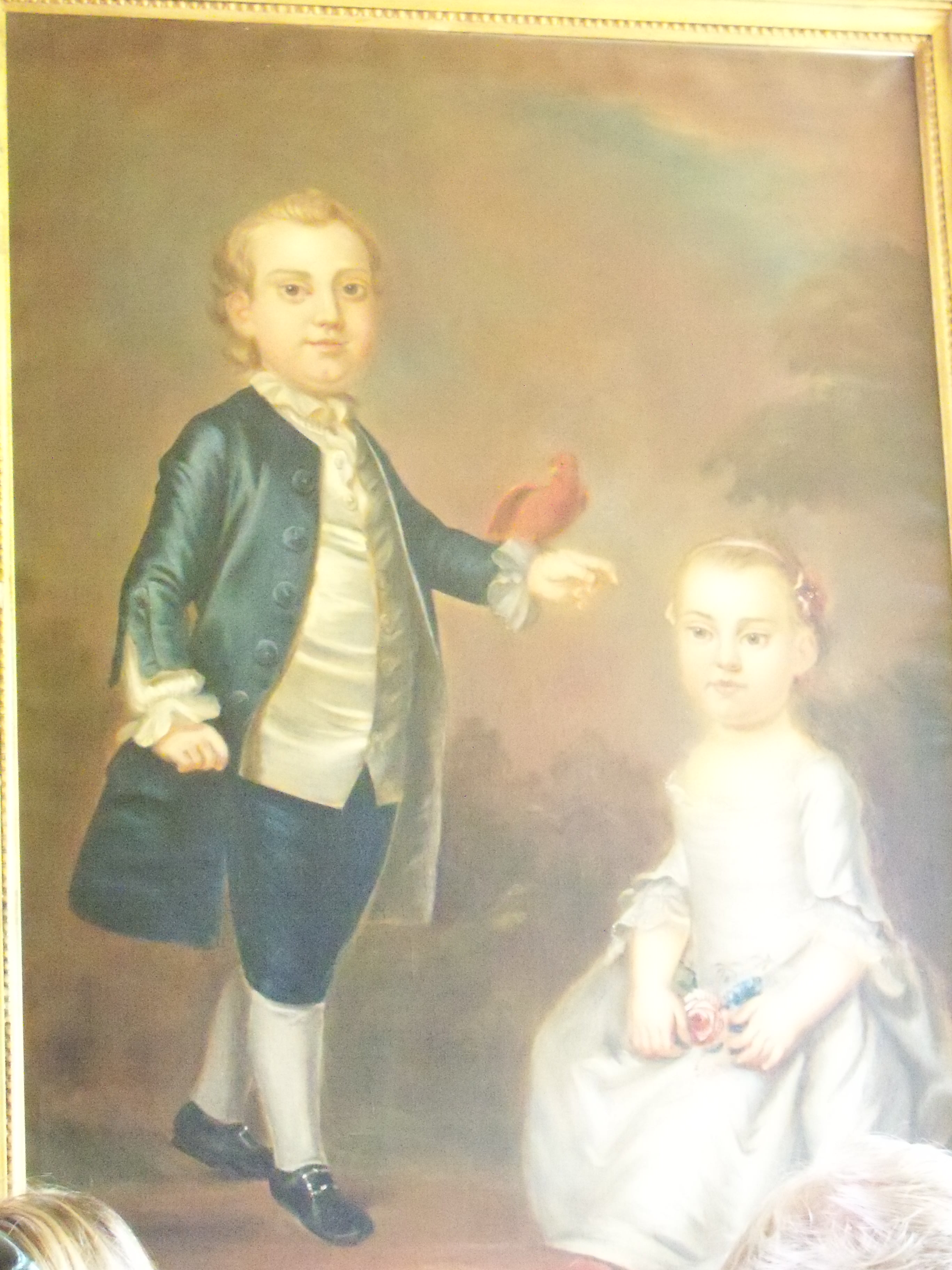
A (not so great) portrait of young Jacky and Patsy, now at Arlington House, Arlington, VA.

Jacky grew up strong and well. He received the opportunity for the best education at the time but was known as being lazy, troubled, and “free willed”. He took no interest in book studies. As he grew older, he took great interest in horses and in having a good time. Patsy, throughout her life, did not have a strong constitution; she suffered from epileptic seizures. She did take more advantage of her educational opportunities than her brother and by all accounts was a sweet, loving, and well-loved girl.

At age 18, in 1773, Jacky announced his engagement to Miss Eleanor Calvert, a granddaughter of the 5th Baron Baltimore. Neither George nor Martha were fully pleased with this announcement. Jacky was still attending college (King’s College, now Columbia University), and Eleanor was only 15. They managed to convince the young couple to wait to wed until Jacky completed his studies.

This plan changed on June 19, 1773. Eleanor was visiting her future in-laws while Jacky was away at college. During luncheon that day, the family was discussing, among other things, wedding plans for the couple. Tragically, Patsy suffered another seizure while at table and died in her stepfather’s arms. Jacky left college to return home. Because of Martha’s intense bereavement at losing her third child, George consented to the wedding to be held at the earliest convenient time to aid in her recovery.

Jacky and Eleanor married on February 3, 1774, at her family home at the Mount Airy estate in Maryland. They eventually moved to an estate closer to Mount Vernon where they started their family. During their 7 year marriage, they had 7 children. Their first daughter as well as later twin daughters died shortly after birth. The other four, Elizabeth “Eliza”, Martha “Patsy”, Eleanor “Nelly”, and George Washington “Wash”, survived to old age.

Martha rejoiced in her grandchildren but remained terrified that she would lose her remaining child. Because of this, Jacky spent minimal time serving under his stepfather during the Revolution. He served as a civilian aide-de-camp to the General at Yorktown and was there for the surrender of General Cornwallis. Sadly, Martha’s fear came true. Shortly after the surrender, Jacky became ill and died on November 5, 1781.

As the General and his Lady settled back into their home life after the War, they offered to raise their two youngest grandchildren to take a bit of a burden off of Jacky’s widow Eleanor. George and Martha raise young Nelly and baby Wash as if they were their own children and not their grandchildren. The two children adored their grandparents and did everything they could in later years to keep the memories of their grandparents alive.

Washington family portrait, now in the National Gallery of Art, Washington, DC.

January 9

Happy Birthday, Richard Nixon! Our 37th President was born on this day in 1913. Miss B. says he was her first President. She remembers some of the things that happened while he was President. She says he did a good job working with the leaders of other countries.

In 1972, he and his wife, Pat, traveled to China. According to a story Miss B. once heard, while they were there, they had dinner with the leader of China and his wife. As they sat down to talk after dinner, Mrs. Nixon saw a pack of cigarettes on the table. On the pack, was a picture of a panda. (Pandas live in the wild in China, but they are a vulnerable species.) Mrs. Nixon pointed to the pack and asked if she could have one, meaning a cigarette. The Chinese leader thought she wanted a panda! Soon after their visit, two pandas were sent to President and Mrs. Nixon to live in Washington, DC, at the National Zoo! Ling-Ling and Hsing-Hsing spent the rest of their lives in DC, and were loved by all. They had five babies, but none survived. After Ling-Ling and Hsing-Hsing both died of old age, China sent two more pandas to the Zoo. So far, they have had three baby pandas who have survived, Tai Shan, (Princess) Bao Bao, and Bei Bei. The older two babies are now grown up and live in China. Bei Bei still lives with his parents at the National Zoo.

Unfortunately, President Nixon got himself into some big trouble involving a break-in at the Watergate Building in DC and many lies that he told about it. (That’s a story for another day!) Because of this, President Nixon decided that it would be better for him and our country if he resigned. On August 9, 1974, he became the first, and so far only, President to resign from office.

Happy Anniversary!

Today is the wedding anniversary of two of our Presidents and First Ladies!

George and Martha Washington married 260 years ago today in 1759. George and Barbara Bush married 74 years ago today in 1945. For both couples, it was love at first sight.

Martha, a young and wealthy widow with two young children, met the young military man at the home of mutual friends. They knew almost immediately that they were meant for each other. George not only fell in love with her but also with her young children, Jacky and Patsy. He proposed shortly after their first meeting, and, obviously, she accepted. They married about ten months after they first met at her family home which was named “White House”.

The General and his lady spent nearly 41 years together until his death on December 14, 1799. Even with the demands of his public service, they remained close and deeply in love. He enjoyed nothing more than being able to be home with her and their family. During the years of the Revolution, she spent time away from him acquiring and making necessary supplies for him and his men. Each year, she made the dangerous trip to be with him at his winter camp, taking those supplies and staying with him for as long as she could. By all accounts, the General anxiously looked forward to these visits, and he was much calmer and happier when she was around. When they needed to be apart, they wrote to each other frequently. After his death, she could not bring herself to return to the bedroom they had shared in their beloved home, Mount Vernon. Instead, she moved to a small, sparse room on the third floor of the house. Before her death on May 22, 1802, she managed to burn nearly all of the letters that they had exchanged over the years. She had shared him with the world in life; she did not want to share him in death. Only three of these letters accidentally escaped her. One was discovered stuck to the bottom of a drawer in a desk inherited by her namesake granddaughter. The General wrote it to her on June 18, 1775, as he prepared to take command of the Colonial Army. His words and his tone leave no doubt that they were deeply in love and devoted to each other.

George and Barbara Bush met at a country club dance. She was only 16, but she knew he was the one. He proposed after 18 months, and they married when he was home on leave from the Navy near the end of World War II. She often commented that she married the first and only man she ever kissed. They had 73 years together. They moved multiple times throughout their marriage, following his career, first in the oil business and then in service to our country in a wide variety of positions, culminating in his election to the Presidency. They had six children, five who lived to grow up. Their first daughter, Robin, died at only three years old of leukemia. Her death deeply affected both of them, and she remained a major part of their lives. They became only the second First Couple to see their son serve our country as President as well. They hold the record for having the longest marriage of any First Couple. George died on November 30, this past year, only seven months after Barbara’s death on April 17. One of their young great-granddaughters commented that he died right before Christmas because he had to be with her to decorate their tree; they had never spent a Christmas apart.